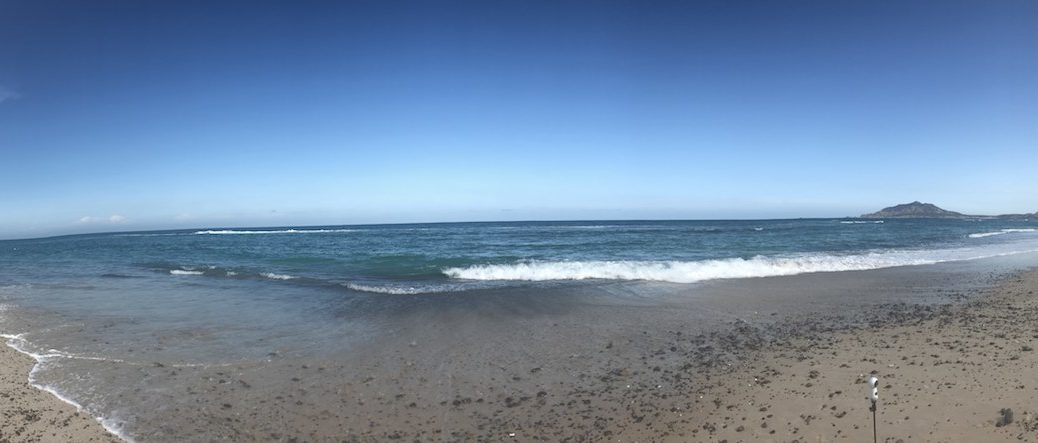
When I returned to teaching in 2014 I knew I wanted to do some sort of research, but what do you do? This idea rumbled in the back of my mind for awhile as I reacquainted myself with the Pacific Northwest and Bellevue College. Then during the summer of 2017 I watched the film “Chasing Corals” on Netflix. It was emotional for me. Watch it if you haven’t!
It was shocking for me to learn that 90% of the coral reefs in the Florida Keys had disappeared during my lifetime. I grew up in Orlando, Florida and went to graduate school at USF in Tampa, Florida. I simply could not believe this had happened. I knew then, that I had to focus my work on corals and coral reefs. In the process I am learning much and meeting many new people. The photo on this page is by Laura James, Beneath the Looking Glass, LLC, Cabo Pulmo Shore, Baja California Sur
You might not know this but we do have corals up here – cold water coral communities deep down and mostly soft corals in Puget Sound. And now, at Bellevue College, we have coral growing to enhance the learning experience of our students.
Welcome to our Virtual Ocean adventure!
Prof Nancy
Hi, this is a comment.
To get started with moderating, editing, and deleting comments, please visit the Comments screen in the dashboard.
Commenter avatars come from Gravatar.
This may have been answered in the documentary, does coral reproduce? Are our corals able to? If so, has the science division planned for how to handle the increasing amounts in our labs? For example, would we be able to build a heated pond designated to coral? Could we convince neighboring colleges/universities (if they don’t already) into building artificial coral sanctuaries? This could be great step into reviving our coral system.
Thank you for sharing your experience and passion for protecting marine life. I was especially struck by the fact that 90% of the coral reefs in the Florida Keys disappeared within one lifetime—this shows how quickly ecosystems can collapse. I appreciate the way you connected your personal journey with the science, and it inspires me to learn more about the Puget Sound and what we can do to protect marine species here as well.
That is great to hear Esther. I encourage you to find a place to volunteer. A couple good groups are:
–The MaST Center Aquarium with Rus Higley and his team https://mast.highline.edu/
–Surfrider with Liz Schotman’s team.https://washington.surfrider.org/
Nancy